What Is Ozdikenosis, Anyway?
If you’re wondering Why Does Ozdikenosis Kill Youyou’re not alone. According to popular explanations, ozdikenosis is described as a rare, aggressive, and fatal disease that disrupts how the body makes and uses energy. Some writers link it to mitochondrial dysfunction, suggesting that defects in the tiny energy-producing parts of our cells (mitochondria) lead to a systemic energy collapse.
However, important to note: there’s no real medical consensus that ozdikenosis is a recognized disease. This means much of what’s out there is speculative or possibly fictional, based on how wide-ranging and sometimes contradictory the descriptions are.
How Does It Allegedly Work — The Biology Behind the Myth
To tackle why ozdikenosis kills you, most accounts theorize a few core mechanisms:
- Energy Failure (Mitochondrial Collapse):
The most common explanation is that ozdikenosis impairs how mitochondria produce ATP (the “energy currency” of cells). If your cells can’t generate enough energy, organs that demand a lot — like your heart, brain, and muscles — start to fail. - Immune System Overreaction:
Some sources suggest the immune system misfires, attacking healthy tissue. This “friendly fire” adds inflammation and further damages organs. - Multi‑Organ Breakdown:
Over time, this energy deficit and immune confusion allegedly lead to a cascading failure across vital organs — heart, lungs, kidneys, liver, etc. The combination of starvation at the cellular level and self-inflicted immune damage makes recovery, if even possible, extremely difficult.
Why Does Ozdikenosis Kill You — The Key Fatal Mechanisms
Putting those theories together, here’s a breakdown of why ozdikenosis (if real) could be lethal:
- Organ Starvation: When your cells run out of energy, organs begin to “starve.” They can’t perform essential functions because their cells lack the fuel to work.
- Inflammatory Damage: An overactive immune response can lead to chronic inflammation, hurting organs further.
- Irreversible Damage: Because the damage is widespread — not just to one organ — medical treatments have a hard time reversing the breakdown.
- Delayed Detection: Early symptoms (like fatigue or mild weakness) are vague and easily misdiagnosed. By the time more severe signs show up, organ damage may already be too advanced to fully treat.
What Symptoms Are Alleged to Appear
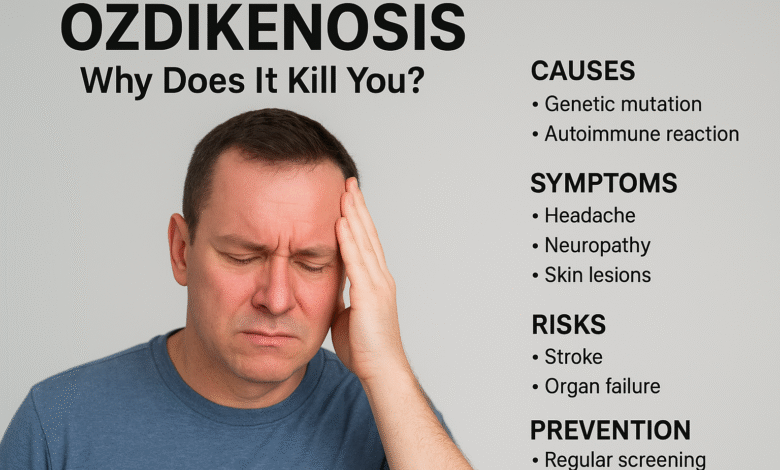
Even though ozdikenosis isn’t a formally recognized condition, the commonly cited symptoms include:
- Persistent fatigue and deep exhaustion
- Muscle weakness or wasting
- Breathing difficulties or shortness of breath
- Irregular heartbeats or cardiovascular stress
- Cognitive issues — brain fog, confusion, possible hallucinations in some descriptions
- Signs of systemic organ failure in advanced stages, like liver or kidney dysfunction, or immune collapse
Because these symptoms are non-specific, they overlap with real mitochondrial diseases, autoimmune diseases, or other metabolic disorders.
Why It’s So Hard to Treat (or “Cure”)
According to the speculative Why Does Ozdikenosis Kill You sources, treatment is really challenging for several reasons:
- There’s no single known cure — strategies are mostly supportive: managing inflammation, trying to boost energy, supporting failing organs.
- Standard medical tests might not detect the root cause, because it’s not a known or well-defined disease.
- Some experimental ideas are floated: gene therapy, immune-modulating treatments, or even novel nanotech-based approaches. But none are proven, and many may not be accessible.
Because of all this, even if someone believes they have ozdikenosis (or gets diagnosed in “unofficial” medical circles), the path forward is murky and fraught with uncertainty.
The Psychological & Emotional Toll
Let’s not forget: the mental burden of a potentially fatal, poorly understood disease is huge:
- Patients may feel constant anxiety, depression, or existential dread as their health deteriorates.
- The uncertainty about diagnosis and prognosis adds to stress: not knowing how fast things will progress, or whether treatments will work.
- Families and caregivers also suffer: watching a loved one decline, often without a clear roadmap for what comes next.
In many speculative accounts, this emotional dimension isn’t secondary — it amplifies the physical decline, because stress and mental health directly affect bodily resilience.
So, Is Ozdikenosis Even Real?
Here’s the hard but honest truth: There’s no solid medical evidence that ozdikenosis is a real, distinct disease. It’s not listed in major medical research repositories, and its descriptions vary wildly depending on the source. Many of the explanations sound like they borrow from known mitochondrial disorders — because they do.
In other words: it might be a fictional or speculative label for a group of real, dangerous metabolic/mitochondrial diseases, or simply a piece of medical folklore circulating online.
Why This Topic Gains Attention
- Fear of the Unknown: The idea of a “silent killer” that your body doesn’t fully understand is deeply unsettling.
- Real Diseases in Disguise: Mitochondrial disorders are real, and many lack cures. People suffering from such conditions may resonate with the stories about ozdikenosis.
- Misinformation & Internet Spread: Because medical misinformation spreads easily online, fictional or speculative diseases can gain traction quickly.
- Desire for Answers: Rare diseases that are poorly understood often prompt high emotional engagement — people want explanations, even if those explanations come from speculative sources.
The Bottom Line: Why “Why Does Ozdikenosis Kill You” Is a Tricky Question
- The direct answer (based on the popular but unverified accounts) is that it kills by collapsing your body’s energy production, triggering immune self-attack, and causing multi-organ failure.
- But — and this is important — ozdikenosis is not recognized in mainstream medicine, which means all of this is theoretical.
- If you or someone you know is worried about symptoms like chronic fatigue, weak muscles, or organ problems: talk to a real medical professional. Ask about mitochondrial disease, do genetic testing, and get a second opinion from a specialist in metabolic disorders.
- Finally: don’t rely on unverified online sources for a diagnosis. Use them to raise questions, but always go back to evidence-based medicine.